
Blog
Is Your eIFU URL Ready for the UDI Database?
From 2026, the use of EUDAMED will become mandatory for most modules, making it the central hub for transparency and safety in the EU market.
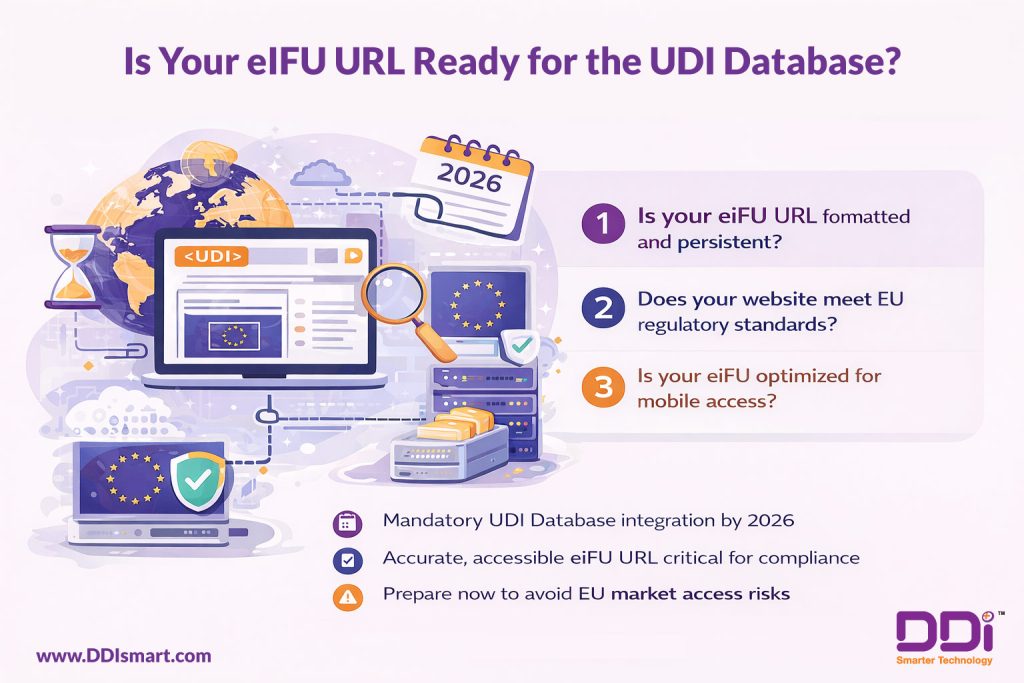
One of the most critical aspects of this transition is the integration of electronic Instructions for Use (eIFU) within the Unique Device Identification (UDI) database. As the European Commission pushes for a more digital and efficient healthcare ecosystem, the era of bulky paper manuals is fading. However, digital transition brings new regulatory responsibilities. If your eIFU URL is not properly formatted, hosted, or linked within the UDI database by the deadline, your products could face significant market access hurdles.
The Role of eIFU in the UDI Database
Under the MDR and IVDR, the UDI system is designed to provide a framework for the identification and traceability of medical devices. Every device must have a Basic UDI-DI, which is the main key in the database and relevant documentation. Within the UDI-DI data elements required for EUDAMED registration, there is a specific field for the website where the electronic Instructions for Use can be found.
The eIFU is more than just a PDF on a website. It is a regulated document that must comply with Regulation (EU) No 207/2012 (for those devices still under certain transitions) or the newer requirements under the MDR. When a user scans a UDI carrier on a product, they should be able to navigate to the EUDAMED public portal or the manufacturer website to find the exact instructions for that specific version of the device.
Preparing Your Digital Infrastructure for 2026
To ensure your eIFU URL is ready for the 2026 deadline, you must evaluate your current digital asset management strategy. Many companies still rely on basic web servers that lack the version control and security protocols necessary for medical device documentation.
A compliant eIFU strategy involves more than just hosting a file. It requires a system that ensures the privacy of the data, the integrity of the document, and the availability of the server. The European Commission expects that the eIFU will be available 24/7. Your infrastructure must have redundancy and a plan for what happens if your primary website goes offline.
Furthermore, you must consider the “intended use” of the URL. The MDR specifies that instructions for use must be provided in a way that protects the user. This includes ensuring that the website is free from commercial advertising or pop-ups that distract the user from the safety information. If your current eIFU URL leads to a marketing-heavy page, you will likely need to redesign your landing page structure before the 2026 deadline.
Technical Requirements for eIFU URLs in EUDAMED
When entering data into the UDI/Device Registration module, the technical specifications for the URL must be followed. While EUDAMED allows for a single URL field, the strategy behind that URL can vary.
Some manufacturers choose a direct link to a PDF. This is simple but lacks flexibility if the document version changes. Others use a dynamic URL that redirects the user based on the UDI-DI or the serial number of the device. This is a more robust approach but requires a sophisticated backend system. Regardless of the method, the URL must be “clean.” It should not contain session IDs or tracking parameters that might expire or cause the page to fail when accessed by a third party.
Another technical consideration is the format of the eIFU itself. While PDF is the standard, the document must be optimized for mobile viewing. Many healthcare professionals’ access EUDAMED and manufacturer websites via tablets or smartphones in a clinical setting. If your eIFU is a 200-page document that is not indexed or searchable, it defeats the purpose of an electronic format.
The Global Perspective on UDI and eIFU
While the focus is on EUDAMED, it is important to remember that UDI systems are being implemented globally. The FDA in the United States, the TGA in Australia, and other regulators are all moving toward digital instructions. However, the EU requirements remain some of the most prescriptive.
The 2026 deadline is not just a local milestone. It is a benchmark for global manufacturers who want to maintain their presence in one of the world’s largest medical device markets. By solving the eIFU URL challenge for EUDAMED, you are essentially building a global digital labeling strategy that can be adapted for other jurisdictions. This saves time and resources in the long run.
Steps to Take
If you have not yet audited your eIFU URL strategy, the time to start is now. Begin by mapping every UDI-DI to its corresponding eIFU. Check for broken links and ensure that the hosting environment meets MDR standards for security and availability.
Next, evaluate your internal workflow. Who is responsible for updating the URL in EUDAMED if the website structure changes? Is there a communication bridge between the IT department and the Regulatory Affairs team? Frequently, these two departments work in silos, which leads to discrepancies in the registered data.
Finally, consider the user experience. Test the eIFU URL on multiple devices and browsers. Ensure that the document is easy to find, easy to read, and available in all required languages. The 2026 deadline is about more than just checking a box in a database. It is about improving patient safety through better access to information.
The 2026 EUDAMED deadline represents a turning point for the medical device industry. The shift toward a fully digital regulatory environment is no longer a future concept but a present reality. Your eIFU URL is a small but mighty piece of data that connects your product to the world. Ensuring that this URL is ready for the UDI database requires a blend of regulatory knowledge, technical expertise, and proactive planning.
Get the latest updates from DDi
Explore Topics
Recent Blogs
 You Don’t Need RIMS: Othe…In Regulatory Information Management
 UDI Packaging Data Challe…In UDI
 Different QC options. Why…In Automation & AI


CONNECT WITH US

Let's talk about how DDi can help you