Strategy, Intel & Impact AI Agents

Ready to Go !

Too much Data. Too little Direction.

Regulatory, Clinical and Project teams operate in data abundant and sometimes chaotic environments. Several data sources, Agency alerts, internal excels, & 3rd party subscriptions. Multiple stakeholders need different levels, varied contexts and formats. By the time your existing systems or teams gather updated info, build some data or reports or analysis, it’s late. So, the problem isn’t access to data. The problem is Absorption. Faster and contextual access is key.

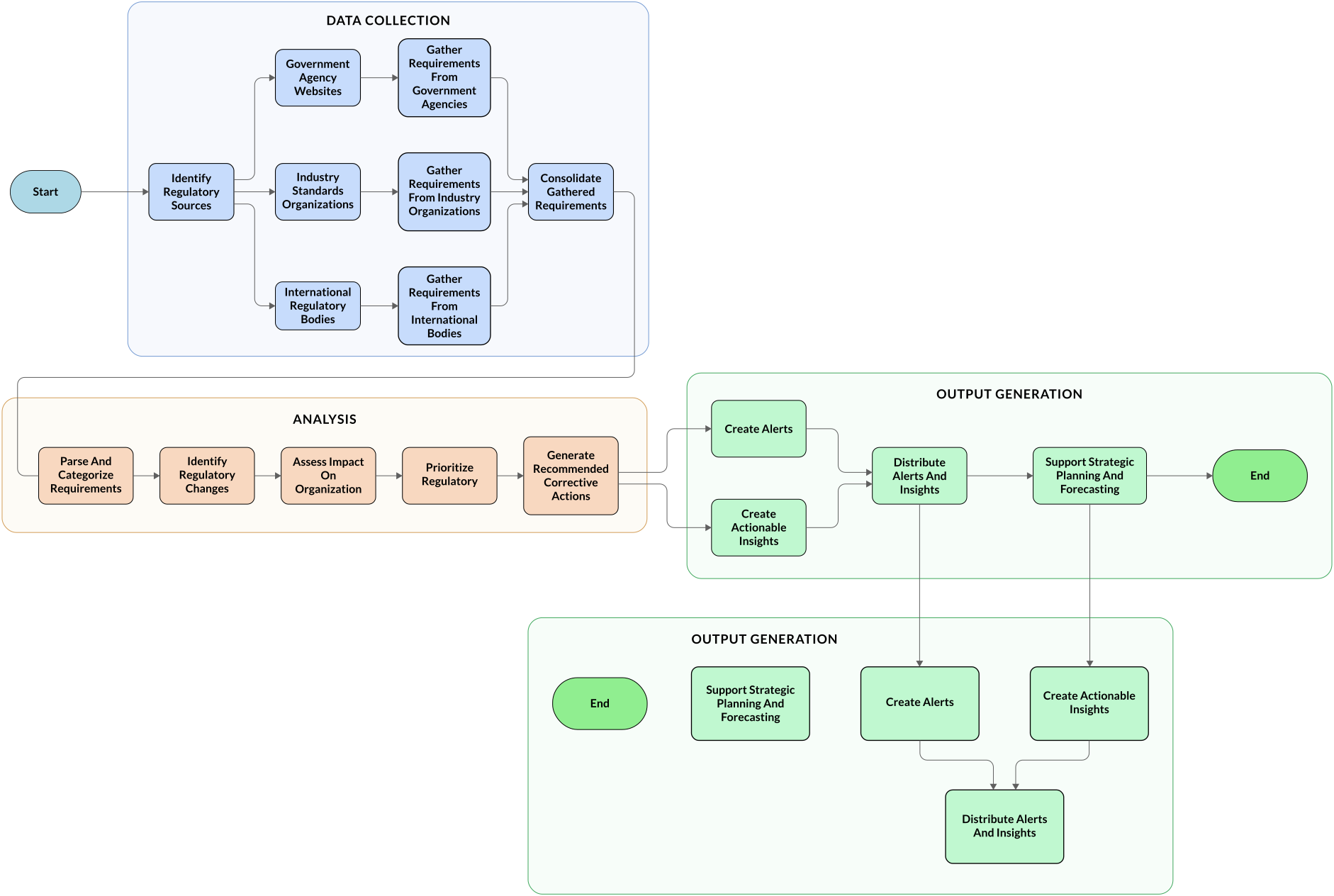
Regulatory Insights Agent

Stay ahead of ever-changing regulations without the manual grind. This AI agent scans new guidelines, regulations and distills them into clear, relevant requirements and insights for your teams aligned by country and product areas.

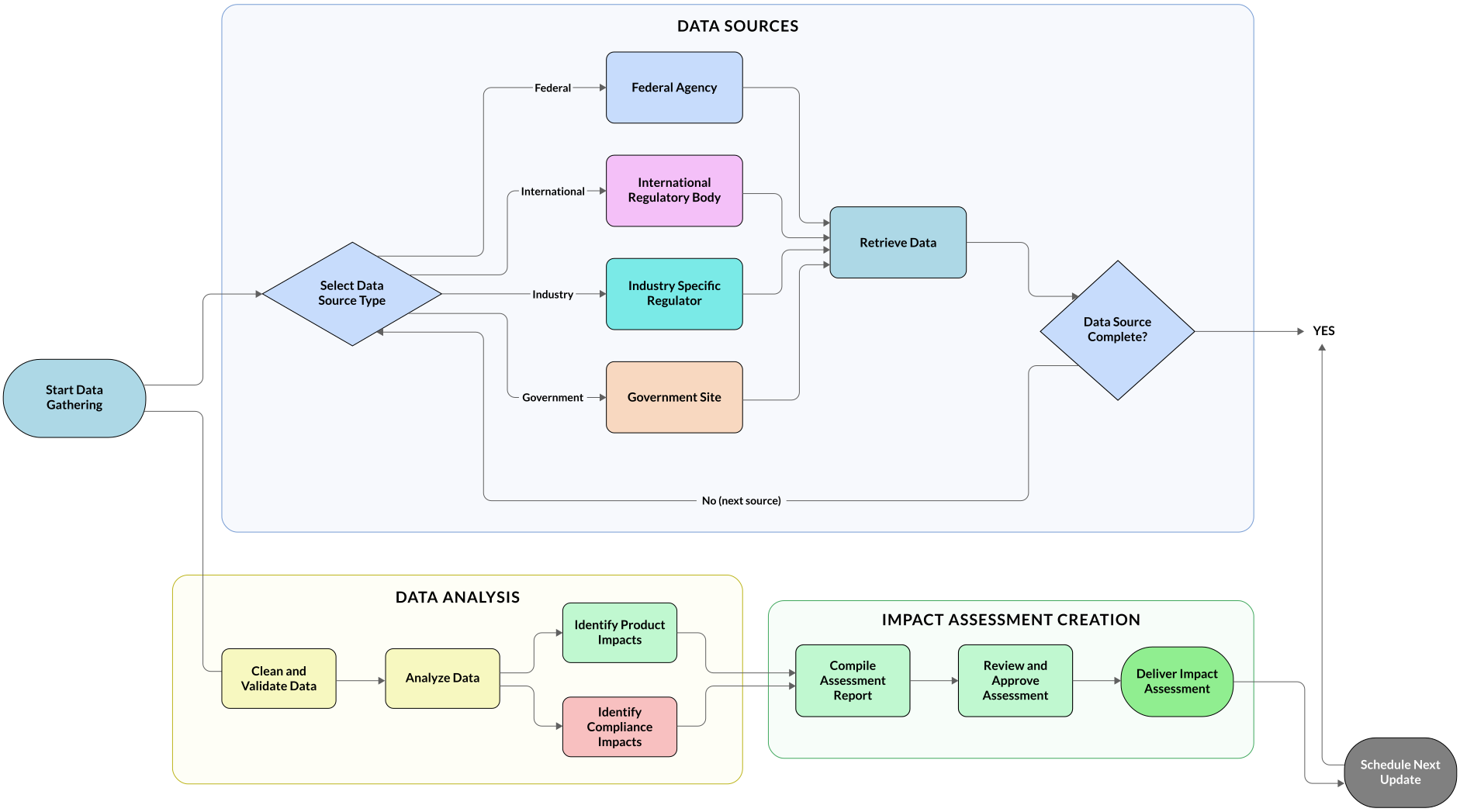
Regulatory Impact Agent

External changes and internal changes happen every day. Doing impact on each of these to ensure products stay compliant and don’t lose value is an important step, yet heavily manual. Impact Agent takes these changes and analyses to determine impact area by function, product, or process. Combining with other agents, this can save hours and help you act with confidence.

Regulatory Strategy

Regulatory teams aren’t lacking data, they’re missing clarity. This agent provides Strategy options: using automation to surface what’s working, why it’s working, and how to prove it. It pools siloed data, reviews your historical plans (if exist) and deliver management-ready narratives.

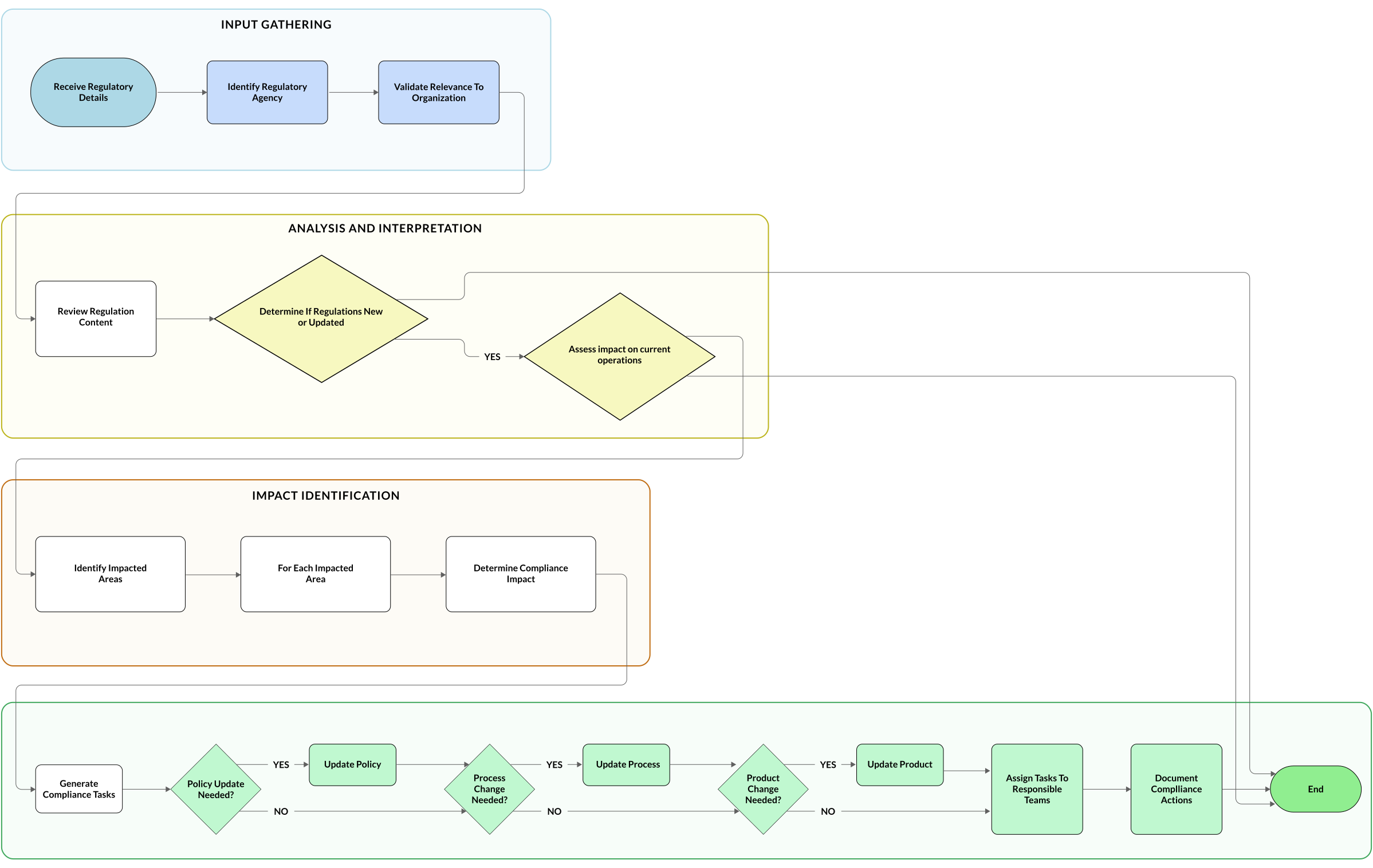
Change Planning & Actions

Action items based on regulatory changes impacting a process or a product involve several manual steps and time consuming. Leverage our agent that can create steps and actions based on the assessments and available data. It can connect to our project tools or can create actions and activities in any of your current tools.

How our Agents Help Your Strategy Teams

DDi empowers Strategy teams to automate routine tasks, manual activities and processes – freeing them to focus on stake holder engagement and project delivery on-time/on-budget.

+70%

More Insights vs Manual

4x

Up Arrow

Faster Response Times

50%

Up Arrow

Coust Redaction

Illustrative Workflow Templates

×

Deploy your Platform AI Agents in 4 Easy Steps

Agent Discovery

Conduct workshop(s) with relevant stakeholders to identify and prioritize use cases and map the requirements.

Agent Discovery

Agent Setup

Develop and launch your first agent with basic logic and integration (process scoping and recording, test dataset with few examples, baseline agent running and testing with target output mapping).

Agent Setup

Agent Training

Test performance and gather feedback from process users (agent optimization up to 80% against expected output, variable-level accuracy measurement and optimization, integrations setup, and feedback).
Agent Training

Agent Live

Extend to more workflows and other teams (live and continuous monitoring, human-in-the loop interfacing, automated prompt enhancements, >90% accuracy improvement, constant business logic improvements).

Agent Live

Want AI to optimize your regulatory strategy and Assessments?

Frequently Asked Questions (FAQs)

1. What are AI agents for regulatory strategy in life sciences?
AI agents for regulatory strategy are intelligent, task-focused systems designed to analyze large volumes of regulatory, clinical, and operational data. In biopharma and medical device environments, these agents help transform fragmented data into clear insights, impact assessments, and strategic recommendations, supporting faster and more confident regulatory decision-making.
2. How do AI agents improve regulatory intelligence and monitoring?
AI agents continuously scan regulatory guidelines, agency updates, and external intelligence sources. They filter, interpret, and contextualize changes by country, product type, and functional area, allowing regulatory teams to stay current without manually tracking multiple sources or subscriptions.
3. Can AI agents help assess regulatory impact across products and functions?
Yes. Regulatory Impact AI agents analyze both external regulatory changes and internal product or process updates. They identify where changes may affect submissions, labeling, clinical processes, or compliance activities, helping teams prioritize actions and reduce the risk of non-compliance.
4. How does AI support regulatory strategy development for biopharma and medical devices?
AI agents support regulatory strategy by reviewing historical submissions, past decisions, and outcomes to surface patterns and insights. They help teams understand what worked, why it worked, and how to support future regulatory pathways with data-backed narratives and management-ready insights.
5. What problems do AI agents solve for regulatory and clinical teams?
Regulatory and clinical teams often face information overload rather than data scarcity. AI agents address this by improving absorption, delivering faster, context-aware insights instead of raw data. This enables teams to respond quickly to changes, reduce manual analysis, and align stakeholders with consistent information.
6. Can AI agents automate change planning and action management?
Yes. AI agents can automatically generate action steps based on regulatory impact assessments. These actions can be linked to existing project management or enterprise systems, helping teams move from assessment to execution without manual coordination or delays.
7. Are these AI agents compatible with existing RIM and document management systems?
AI agents are designed to work alongside existing systems such as RIM, submission and publishing platforms, document management solutions, and regulatory databases. They enhance these systems by adding intelligence, automation, and contextual analysis, without disrupting current workflows.
8. How do AI agents support faster regulatory response times?
By automating data aggregation, regulatory monitoring, and impact analysis, AI agents significantly reduce the time required to assess changes and prepare responses. This allows regulatory teams to move from awareness to action in hours instead of weeks.
9. Are AI agents customizable for different regulatory use cases?
Yes. AI agents can be configured for specific regulatory functions, products, geographies, or therapeutic areas. Organizations can start with ready-to-use templates and evolve agents over time based on feedback, accuracy targets, and expanding use cases.
10. How does AI help reduce regulatory operational costs?
AI agents reduce dependency on manual effort for monitoring, analysis, and reporting. By automating routine tasks and improving accuracy, organizations can lower operational costs while enabling regulatory experts to focus on higher-value strategic work.
11. How secure and compliant are AI agents used in regulatory strategy?
AI agents operate within defined governance frameworks, supporting audit trails, role-based access, and compliance requirements. They are designed to handle sensitive regulatory and clinical data while maintaining transparency, traceability, and data integrity.
12. How quickly can teams start using AI agents for regulatory strategy?
Teams can begin with discovery workshops to identify priority use cases, followed by rapid agent setup and testing. Initial agents can be deployed quickly and refined over time, allowing organizations to realize value early while scaling automation across functions.
13. Can AI agents support both medical device and biopharma regulatory strategies?
Yes. These AI agents are designed to support regulatory strategy across both medical devices and biopharma, adapting to different regulatory frameworks, documentation requirements, and lifecycle stages while delivering consistent, actionable insights.
The First Step

Let's talk about how DDi can help you